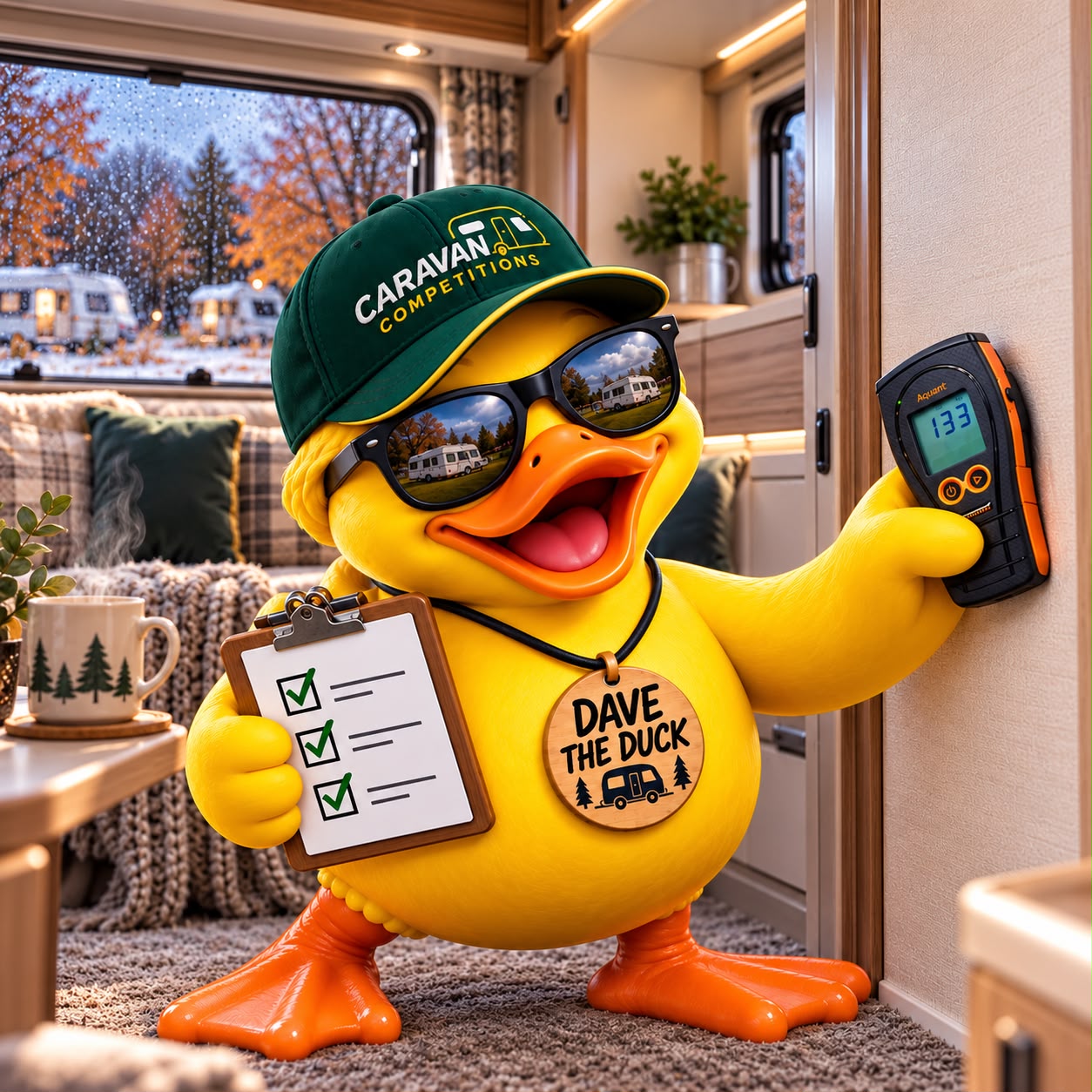
You wake up on a crisp autumn morning, open the blinds and find the windows streaming with water. The cushions feel a little damp and there’s a puddle on the window sill.
Condensation in a caravan is completely normal in the colder months, but it’s worth getting on top of. Left alone, it can lead to mould, musty smells and damp soft furnishings. The good news is that a few simple habits make a big difference.
Dave, meanwhile, has drawn a smiley face on every window. He calls it art.
Why caravans get condensation
Every time you breathe, cook, shower or boil the kettle, you add moisture to the air. When that warm, damp air meets a cold window or wall, it turns back into water.
Caravans are small spaces, so the moisture builds up quickly. Add a family, a dog and a pan of pasta, and the windows don’t stand a chance.
Dave’s final thought: “I’ve been blamed for the condensation. I would like it noted that I am a duck. I am meant to be wet.”
Keep the air moving
It’s tempting to shut every vent when it’s cold, but fresh air is your best defence against condensation.
- Open a roof vent a crack, even on chilly nights.
- Never block the fixed ventilation, the vents built into the floor, walls or roof. They’re there for safety as well as fresh air.
- Open a window for ten minutes in the morning to let the damp air out.
You’ll lose a little heat, but the van will feel fresher and dry out much faster.
Dry wet coats in the awning, not the van
Wet coats, boots and towels release a surprising amount of water as they dry. Keep them out of the living space if you can.
Hang coats in the awning, use a boot tray by the door and, if your campsite has a drying room, make the most of it. Our guide to camping in the rain has more ideas for keeping wet gear under control.
Wipe the windows first thing
Wipe down the windows each morning before the water runs into the frames and seals. A window squeegee or a microfibre cloth does the job quickly. Wring it out outside or into the sink.
Dave’s final thought: “Five minutes with a cloth, or a weekend of damp socks. I know which I’d choose.”
Cook with the lids on
Pan lids keep a lot of steam out of the air, and they save gas too. Switch on the cooker hood or open the roof vent above the hob while you cook, and leave it open for a few minutes afterwards.
On a hook-up pitch, an electric kettle or slow cooker puts less moisture into the air than boiling pans on the hob for ages.
Keep the heating steady
A van that’s warm one minute and freezing the next will get more condensation. A low, steady heat keeps the walls and windows warmer, so less water settles on them.
If you’re on hook-up, a small electric heater on a low setting works well overnight. Check the campsite’s electric supply first so you don’t trip it.
Bring a little help
A few small extras can soak up what’s left:
- Moisture traps or absorbers in cupboards and under the beds
- A small dehumidifier if you’re on hook-up
- A spare towel kept just for wiping windows
Know when it’s more than condensation
Condensation wipes away and dries out. Damp that keeps coming back in the same spot, soft walls, or a musty smell that won’t shift could mean water is getting in from outside.
If you’re worried, have it checked by a qualified caravan engineer, and mention it at your next habitation service.
Dave’s condensation checklist
- Roof vent open a crack, day and night
- Fixed vents clear and never blocked
- Wet coats and boots kept in the awning
- A cloth or squeegee for the windows each morning
- Lids on the pans while cooking
- A low, steady heat rather than blasts of warmth
- Moisture traps in the cupboards
Dave’s final thought
“A dry caravan is a happy caravan. A dry duck, on the other hand, is a worrying sign.”
Heading away for October half-term? Our half-term guide has tips for making the most of the shorter days.
What’s your best trick for beating condensation? Tell us on the Caravan Competitions Facebook page.
Looking for something for your next adventure? Browse our latest competitions to see which prizes are currently up for grabs.